


I sometimes think that some of my problems stem from my inability to let go. Decades ago, I nodded profusely and solemnly when I read the words, ‘Take hold tightly, let go lightly.’ It is laughable how - time and time again- I have shown myself to be completely inadequate when faced with this seemingly simple task. But why let go when you can grab on even tighter? I have been, in many ways, a human barnacle; I have clung and hugged and clenched around any object, animal or person that looked like they may show even the slightest inclination to disentangle themselves from my grasp. The face hugger in Alien could learn a few choice moves from me. Clinging has many downsides, including but not limited to: attracting those who need a lot of looking after; plunging levels of self-esteem; constant anxiety and giving folk a free pass to treat you really badly.
Being a clinger stems from being a member of the Mono no aware club. Mono no aware is a Japanese concept, which translated literally means ‘the pathos of things.’ It imbues people like me with an awareness of the beautiful impermanence of life and you live in a washing machine cycle of feeling deeply stirred and resultantly melancholic. Leaves fall, people die, favourite bowls break, the moon rises and it fills you to the brim then dashes you to the rocks. Fourteenth century Noh writer and actor Zeami Motokiyo wrote that ‘the flower is marvellous because it blooms, and singular because it falls’. If you are in the MNA brigade, you may as well write THIS SHIT IS BITTERSWEET in huge letters across absolutely everything. It doesn’t matter if it’s animal, mineral or vegetable; you can bet that if my gaze drifts upon it, I am already fretting about its passing. Whenever I am stroking the beloved dog as she snoozes, I wonder if this is how she will look when the vet puts her to sleep; what that moment will feel like for her and for me.
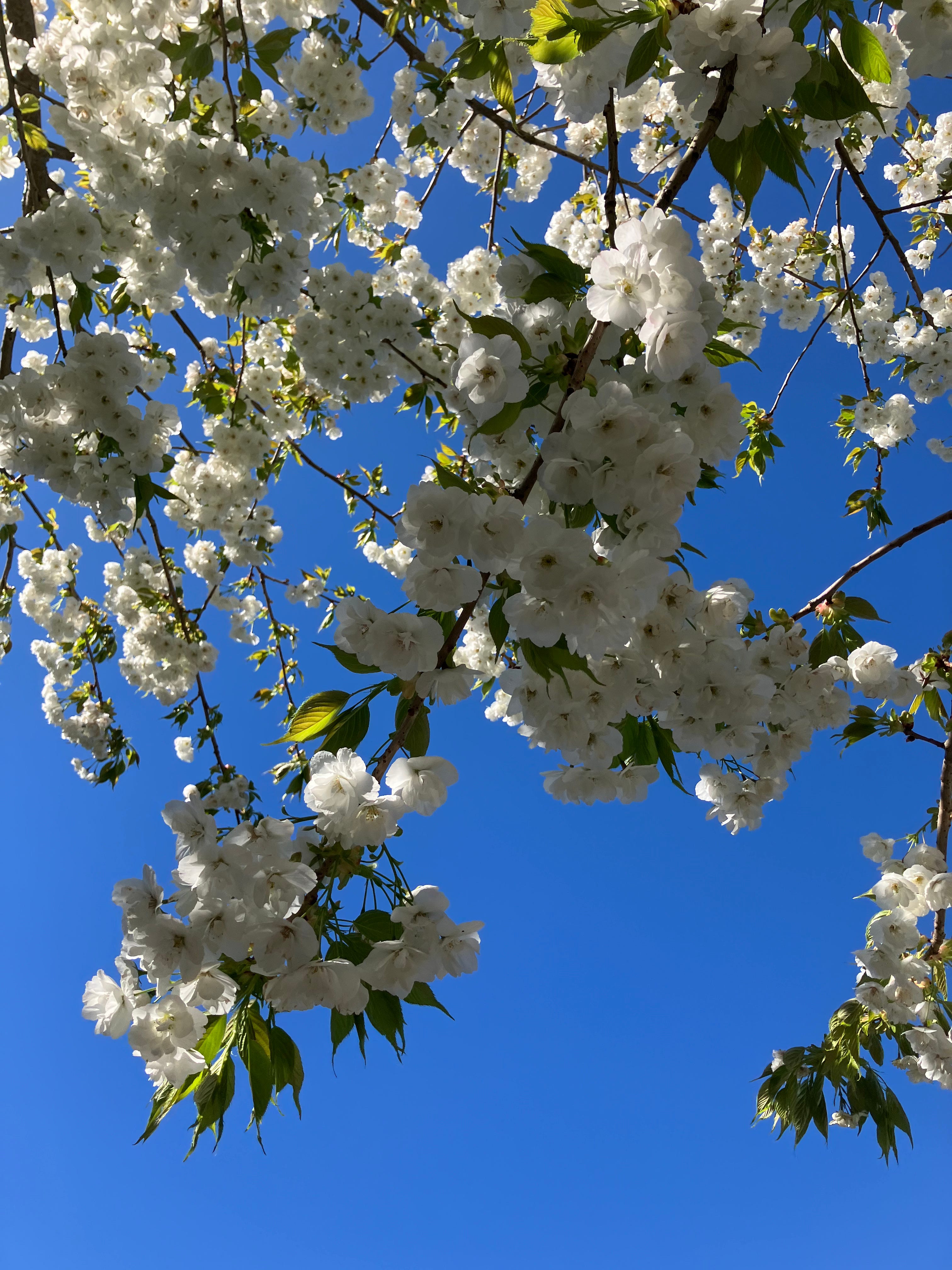
I think it’s a way of bracing myself- if I teleport myself to the worst storms that the Gods can call down, then I will be able to cope when the terrible waves of grief crash against me. Of course it doesn’t work- it isn’t how humans work! You can imagine losing someone all you like but when it actually happens it still rips your heart out of your arse and it hurts more than you think you will be able to bear. You’d think that this knowledge would somehow have freed me from this rumbling wistfulness, but no such luck. Clinging ensues, because how can something die or fade or leave if you have it hooked in a Geoff Capes style headlock?
MNA membership also means that it’s almost impossible to be in the moment- you have an inbuilt camera to precisely capture any moments of radiance and joy. Snuggled up on the sofa with Dan and Syd, cackling hysterically at our favourite film that we’ve seen a hundred times - snap, snap, snap. Swimming in a perfectly warm sea, feeling the water glide frictionlessly around my body- click, click, click. Maybe it’s partially to do with being so ill. I cup these precious memories in my hand as tenderly and carefully as I would a precious seed. They are moments that can be used to inure myself against the disappointment of bad test results, the pain of procedures gone wrong and the tedium of the waiting room. ‘Remember, remember, hold on to those golden hours’, I implore, ‘you will need them when it gets bad.’ The problem, and I think you’re ahead of me here, is that the more you are determined to capture the moment, the more it has already slipped out of your outstretched, yearning hand.
I innately understood the fragility of life from my earliest being. When I was six, I wrote a play entitled (rather magnificently I think,) The Weeps of Life. The first words are spoken to a little girl by a doctor in a hospital. “I’m sorry, but we couldn’t save them.” It turns out [spoiler alert] that the girl’s family have all been summarily wiped out in a multi-car pile-up on the M6. Bet you didn’t see that one coming. The beautiful, aching sadness of the transient. I know now that I understood too young that things could go wrong because I was standing on very rocky foundations. Things weren’t safe at home and my mum had been through so much unfathomable loss. I knew things could go wrong because they had gone wrong. That knowledge isn’t so much an intellectual understanding so much as knitted into your juvenile bones. It makes you want to control everything, because if you are in control then nothing bad can ever happen to you or those you love. Keep people near, keep people safe, never set your telescope down and always be on the lookout for danger. Simple really, as long as you rarely sleep, never relax and hold your breath for 50 years. The kicker is that on my impressively long list of potential catastrophes and Things to Worry AboutTM, I rather carelessly forgot to add ‘Global Pandemic’. I didn’t know that all the watching, the rescuing, the plate spinning and the endless, exhausting fretting would count for naught when it came down to it: it was going to crash catastrophically around my ears anyway.
I look back now and wonder what all that apprehension and unease achieved and what life would have been like if I had just relaxed and lived, but vigilance turns out to be a hard habit to break. How exactly does the watcher learn to stop watching? ‘Practice’ my therapist says, with a wry smile. He makes me feel brave and that change is possible. So practice I do, even though it takes a gargantuan amount of effort to turn off my internal CCTV. I sometimes have to pretend to myself that I simply haven’t seen the couple having a fight, the old man struggling to cross the road, a child crying. Because if I see it then I have to help, and if I have to help that I’m still stuck in the endless cycle of rescuing. And believe me, if your heart and your eyes are open to suffering then you will know that there are a hell of a lot of desperate people in need of succour. I am like the little boy in The Sixth Sense – ‘I see dead people’ - but my curse is that I see the lonely, the hungry and the lost. I have prided myself on my perpetually donned and increasingly tattered super-hero cape: Curry flies in to the rescue once more! But on the days that I am bleeding, grieving, limping it starts to feel more like self-harm than largesse. Adrian tells me that I should be aiming for it to be a choice- to offer assistance on the days that I can manage it, but not to feel bad on the days that I can’t. At first it feels so wildly transgressive and toxic I can’t bear it. Who does it make me if I am not the first responder? It puts me into a spin of self-loathing and sometimes it feels easier to sink back into the old pattern than try to forge a new one. But somewhere deep down I know that I am wilfully making myself ill and somewhere deep down I don’t want that to be true anymore.
I try and work out what my tolerance actually is- I know that I will still never walk past a homeless person without offering food, money or a chat but perhaps it’s okay not to stand in the freezing cold while I am bleeding and exhausted to listen to a mum who I haven’t seen for six years, who never liked me, who had a child that was resolutely horrible to Syd, complain endlessly about the unacceptably undeferential demeanour of the hotel staff on her luxury holiday to Mauritius. I no longer want to bang myself constantly and continually on the jagged, Sisyphean boulders of other people’s needs. I want to swim around the rocks and to squint up at the mackerel sky rather than warily scanning grey streets. I want to enjoy the sensation of sunshine on my face and to feel the salt burn of turquoise-radiant water on my skin. In short, I no longer want to bound towards others with my first aid kit and I want to be in possession of nothing but myself.